
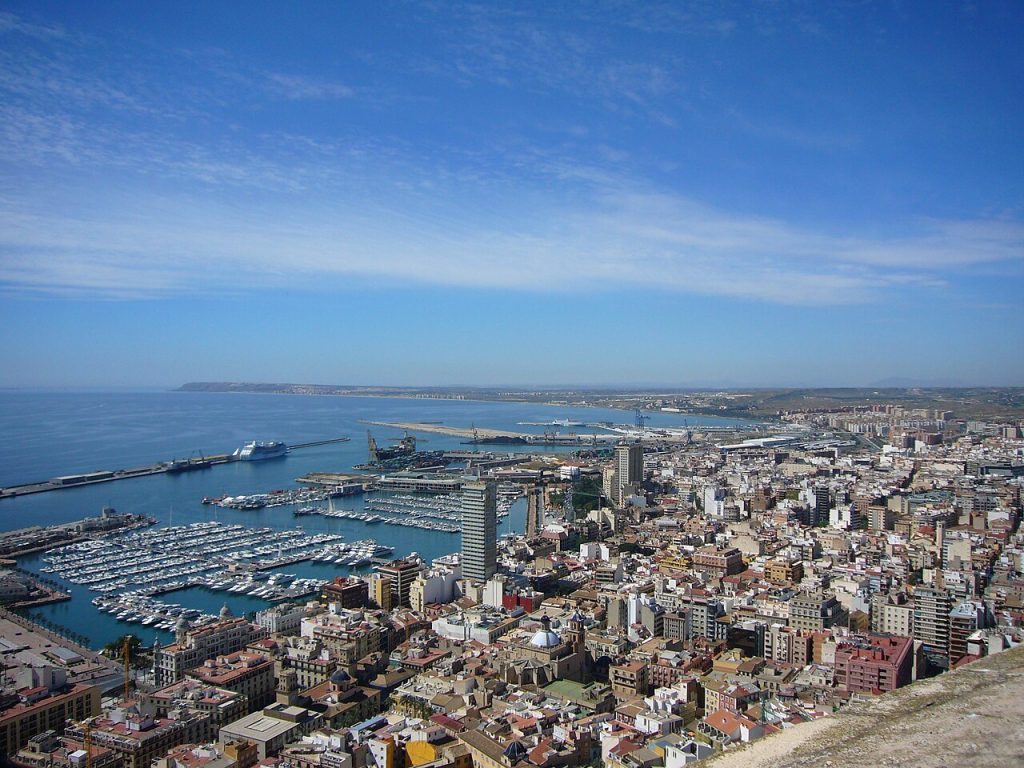
Wondering what to see in Alicante in one day? This walking itinerary covers the historic centre, Santa Bárbara Castle, the picturesque Santa Cruz neighbourhood, the palm-lined Explanada and Postiguet Beach. You can explore the main sights without a car and extend the route into a two- or three-day city break.
Updated October 2026. Museum opening times, castle lift services, transport and admission arrangements may change. Check the official links below before travelling. This guide focuses on Alicante city, rather than the whole province.
Índice de Contenidos
- 1 Alicante in one day: a suggested walking itinerary
- 2 1. Santa Bárbara Castle: panoramic views of Alicante
- 3 2. Basilica of Santa María and the MACA art museum
- 4 3. Santa Cruz: Alicante’s most photogenic old neighbourhood
- 5 4. Alicante old town: City Hall and San Nicolás Co-Cathedral
- 6 5. Explanada de España and Alicante harbour
- 7 6. Postiguet Beach: a beach within walking distance of the centre
- 8 7. What to do in Alicante in two or three days
- 9 Where to eat in Alicante and what local food to try
- 10 Practical Alicante travel tips
- 11 Frequently asked questions about Alicante
Alicante in one day: a suggested walking itinerary
| When | Stop | What to do |
|---|---|---|
| Morning | Santa Bárbara Castle | Discover the fortress and views across the harbour |
| Late morning | Basilica of Santa María and MACA | Explore local heritage and contemporary art |
| Lunchtime | Santa Cruz and the old town | Wander through narrow streets and stop for lunch |
| Afternoon | Explanada de España and harbour | Walk among the palm trees beside the Mediterranean |
| Late afternoon | Postiguet Beach | Relax by the sea before leaving the city centre |
This is a flexible itinerary, not a timed tour. In hot weather, see the castle early and leave the open seafront promenade for later. Travellers with reduced mobility should check slopes and accessible transport in advance.

1. Santa Bárbara Castle: panoramic views of Alicante
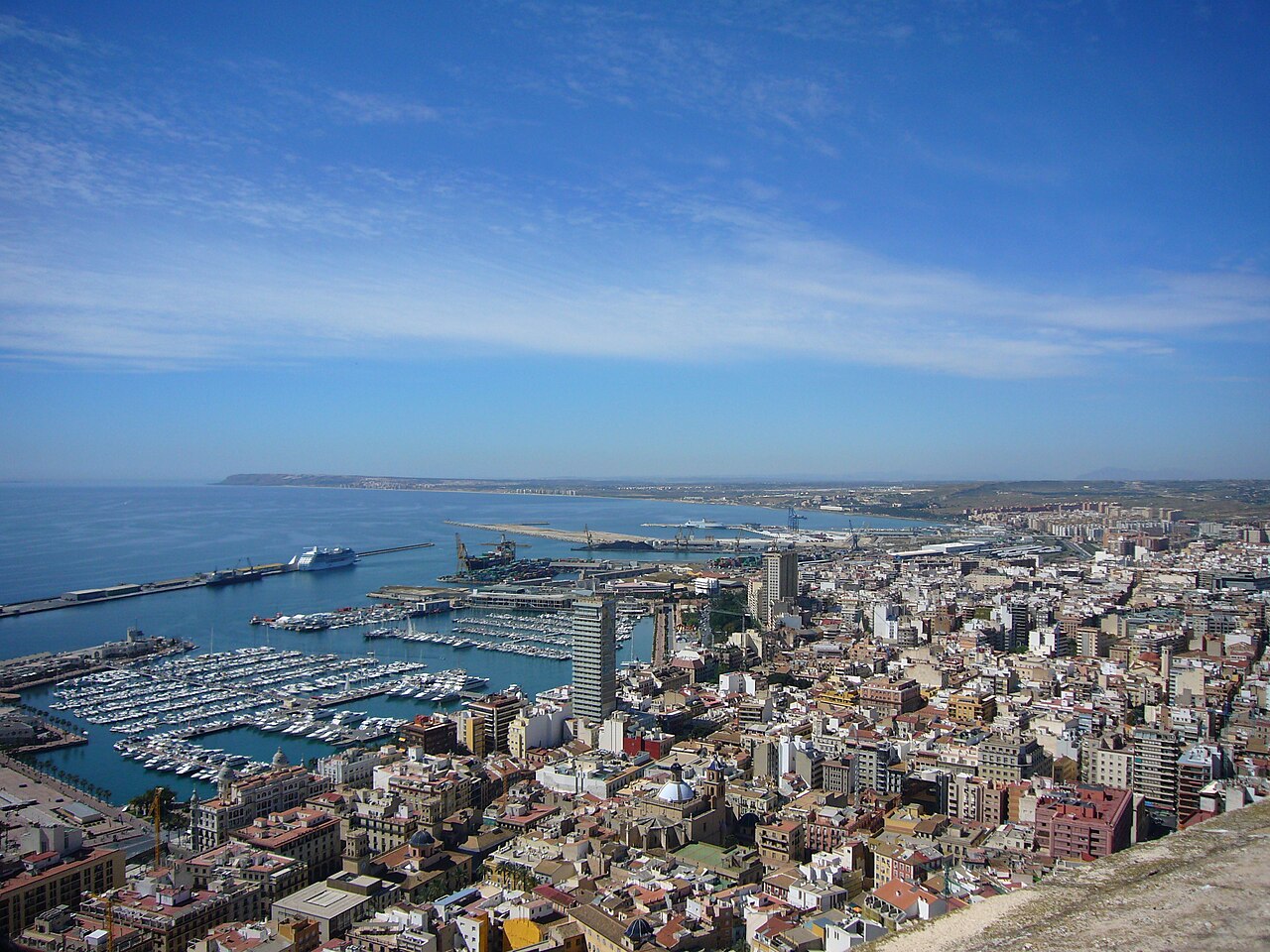
Perched on Mount Benacantil, approximately 166 metres above sea level, Santa Bárbara Castle is one of Alicante’s essential attractions. Its fortifications tell the story of the city’s defensive past, while the terraces offer spectacular views of the port and coastline. The MUSA city museum is also housed within the complex.
Visitors can reach the castle on foot, by shuttle service or via lifts accessed near Avenida Juan Bautista Lafora opposite Postiguet Beach. Private-car access to the fortress is restricted: do not assume you can park at the entrance. Confirm the current access arrangements and opening hours with Alicante’s tourism office.
2. Basilica of Santa María and the MACA art museum
Descending into the historic quarter, visit the Basilica of Santa María, one of the city’s best-known religious monuments. Close by, the Museum of Contemporary Art of Alicante (MACA) offers a contrasting cultural experience.
MACA normally offers free admission, but exhibition schedules and closing days should be checked on its official visitor-information page.
3. Santa Cruz: Alicante’s most photogenic old neighbourhood
The Santa Cruz neighbourhood climbs the slopes beneath the castle. Its small white and colourful houses, flowerpots, staircases and viewpoints make it a favourite area for a leisurely stroll. It is also a residential neighbourhood, so please respect residents and avoid blocking doorways when taking photographs.
Be aware that parts of Santa Cruz are steep and involve steps. Visitors with pushchairs or mobility needs may find the flatter streets around La Rambla more comfortable. Read the official Santa Cruz guide for further details.
4. Alicante old town: City Hall and San Nicolás Co-Cathedral
Spend time around Alicante City Hall, San Nicolás Co-Cathedral and the historic Calle Mayor and Calle Labradores. Their squares and streets make the old town pleasant to explore between museum visits and lunch. Alicante Tourism’s official old-town walking route covers many of these landmarks on a circuit of roughly two kilometres; allow extra time for stops.
5. Explanada de España and Alicante harbour
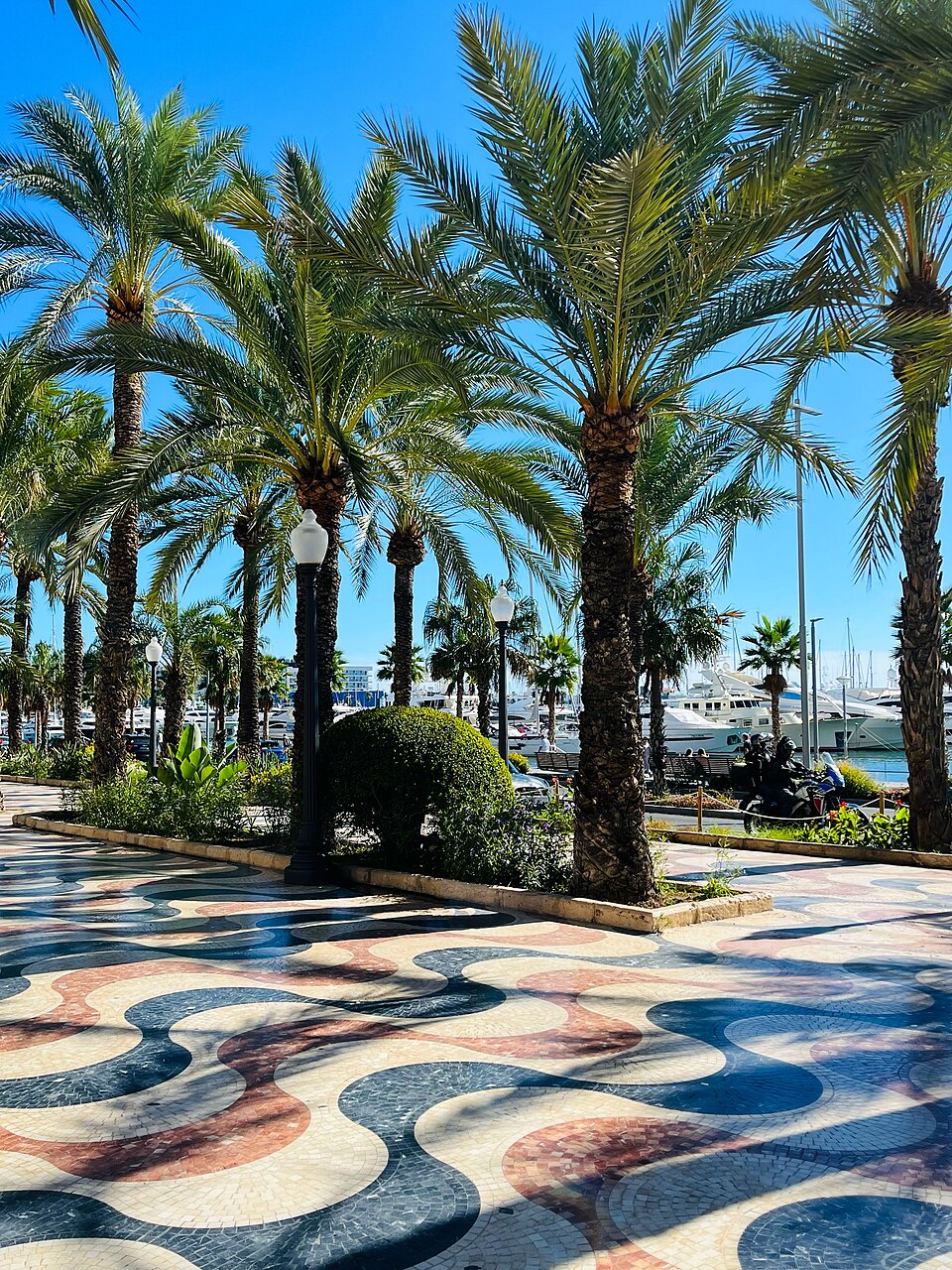

The Explanada de España is famous for its wave-pattern mosaic pavement and rows of palm trees. It is an easy, scenic place to take a break or continue towards the marina. The official seafront walking itinerary connects this promenade with Puerta del Mar and Postiguet.
6. Postiguet Beach: a beach within walking distance of the centre
Playa del Postiguet lies beside Alicante’s historic centre, below the castle. It is ideal for finishing a sightseeing day with a stroll along the sand. If you plan to swim, check the day’s beach flags and lifeguard arrangements; facilities vary with the season.
For a longer beach-focused trip, consider San Juan, Muchavista and the coves elsewhere on the Costa Blanca. Their distances and public transport connections differ considerably from Postiguet.
7. What to do in Alicante in two or three days
With a second day, visit the MARQ Provincial Archaeological Museum, Alicante’s Central Market and more of the historic districts. A third day could include a ferry trip to Tabarca Island when sea conditions and services permit. The tourism office also publishes an Alicante in three days itinerary with further cultural and coastal options.
Where to eat in Alicante and what local food to try
Alicante’s cuisine includes rice dishes, Mediterranean fish, salted seafood and regional sweets. When ordering rice, check whether the price is per person, whether there is a minimum number of diners and whether advance ordering is required.
For a food-focused excursion outside the city, visit Jijona (Xixona), known for its traditional almond nougat. You can also discover artisan Jijona turrón online as a local speciality.
Practical Alicante travel tips
- Walking: wear comfortable footwear with grip, especially on the castle paths and Santa Cruz steps.
- Summer weather: carry water and sun protection; plan shaded breaks.
- Transport: most central sights are walkable. Consult current TRAM and bus schedules for more distant places.
- Accessibility: steep old-town sections may require alternative routes or transport.
- Opening times: verify museums, castle transport and holiday schedules through their official websites.
Frequently asked questions about Alicante
What are the must-see places in Alicante?
Santa Bárbara Castle, Santa Cruz, the Explanada, the historic centre and Postiguet Beach make a varied first-time itinerary.
Is one day enough to visit Alicante?
Yes, for the main central attractions. Spend the morning at the castle and in the old town, then the afternoon around the harbour and beach. Two or three days allow for museums and trips beyond the city.
What can I do in Alicante when it rains?
Consider indoor attractions such as MACA or MARQ, provided they are open and travel conditions are safe. Follow official weather warnings.
Do I need to hire a car in Alicante?
Not for the central itinerary described here. For excursions outside Alicante, compare public transport connections with driving times before deciding.
Should I visit Alicante city or the surrounding province?
Choose the city for historic sights, museums and an easy seafront walking route. Explore the wider province for villages, coves, nature and longer road trips.
Sources: Alicante City Tourism Office, official itineraries and visitor information for Santa Bárbara Castle and MACA. Reviewed October 2026; check details before travelling.