
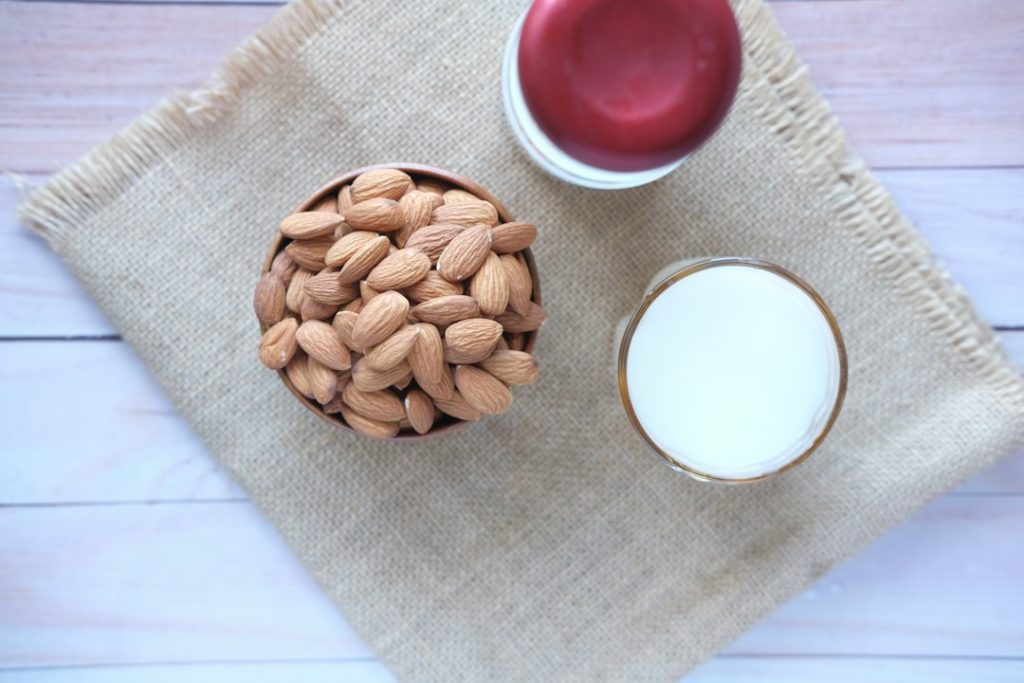
Making almond milk in a Thermomix lets you control its concentration and flavour without adding refined sugar. Fresh Marcona almonds provide a delicate aroma, while fine filtering creates a smoother drink. This is an editorial adaptation for Thermomix models such as TM5, TM6 and TM7; adjust speed and timing to your manufacturer's instructions.
Ingredients
Step by step
Place the raw almonds in a bowl with plenty of drinking water and soak for about 8 hours in the refrigerator, not overnight at room temperature.
Drain and discard the soaking water, then rinse. Peel the almonds if you prefer a milder flavour and lighter colour.
Put the soaked almonds and 300 ml of the recipe water into the Thermomix bowl. Secure the lid without exceeding the model's fill limit.
Blend without heating for around 30 seconds at speed 8. Scrape down the bowl carefully if necessary.
Add the remaining 700 ml water, optional salt and optional pitted date. Blend for around 40 seconds at speed 9, or adapt to the motor and bowl limits of your machine.
Strain into a clean jug through a fine food-safe nut-milk bag or suitable cloth. Press the pulp using clean utensils.
Transfer immediately into a clean bottle and refrigerate at 4°C or below. Shake before drinking and preferably use within 24–48 hours.
Quick reference
Yield: approximately 1 litre before filtering, around five small servings. Active preparation: 15 minutes. Almond soaking: approximately 8 hours. The drink is prepared cold and is not pasteurised.
Why soak the almonds?
Cold soaking softens almonds and can make blending more uniform. It does not replace fine filtering, and refrigeration reduces risks while soaking.
Blend in two stages
Start with 300 ml water for a concentrated initial blend, then add the remaining 700 ml. A fine bag removes particles that a coarse sieve may leave behind.
Variations
For a chocolate drink add a little unsweetened cocoa. For a fragrant drink try cinnamon or vanilla. To thicken, use 130–150 g almonds per litre, noting that calories and nutrients depend on filtration.
No added sugar versus sugar-free
Without the optional date or another sweetener, the recipe has no added sugar. Almonds naturally contain small amounts of sugars; do not claim a specific sugar-free nutrition value without analysing the final filtered drink.
Storage and safety
Homemade almond milk is not commercially pasteurised. Refrigerate promptly, keep equipment clean and discard it if smell or appearance changes. It is not appropriate for someone with an almond allergy.
Is it nutritionally equivalent to supermarket almond milk?
Not necessarily. Packaged versions may be fortified with calcium and vitamins and heat-treated for safety. The amount of almond solids retained after filtering is variable.
Almond pulp
Use the remaining pulp promptly in baked biscuits or cakes, keeping it refrigerated until cooked. It retains moisture and should not be left at room temperature.
Common problems
If the milk is gritty, strain again through a finer cloth. Separation is normal in a homemade non-homogenised drink: shake before serving.
Frequently asked questions
Do I have to soak almonds?
This recipe recommends soaking in the fridge for a smoother texture. Other tested methods may differ.
Is it lactose-free?
It has no dairy ingredients, although equipment and other ingredients must be checked where cross-contact matters.
Can I heat the almond milk?
It can be used in recipes, but this cold recipe does not itself pasteurise the drink.
Discover almonds and traditional Spanish sweets.