
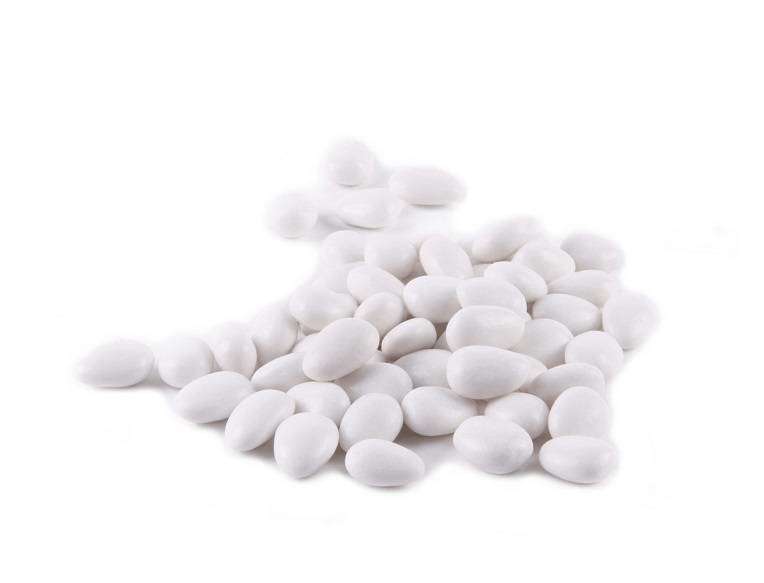
How do confectioners make smooth, white Spanish sugared almonds known as peladillas? The finished sweet may look simple, but producing a regular sugar coating calls for carefully selected almonds, repeated small additions of syrup and the constant turning of a rotating confectionery pan. In Jijona, this is part of a long-standing craft.
Índice de Contenidos
- 1 What are Spanish peladillas?
- 2 Step 1. Select and prepare the almonds
- 3 Step 2. Prepare the rotating coating pan
- 4 Step 3. Prepare the sugar syrup
- 5 Step 4. Add syrup gradually
- 6 Step 5. Control drying and smoothness
- 7 Step 6. Finish, grade and package
- 8 Watch the original Jijona factory video
- 9 Peladillas versus garrapiñadas: what is the difference?
- 10 How are sugar-coated pine nuts made?
- 11 Sugared almonds for weddings, christenings and communions
- 12 How to store peladillas correctly
- 13 A traditional Jijona craft
- 14 Frequently asked questions
What are Spanish peladillas?
Peladillas are whole almonds covered with a firm shell of crystallised sugar. They are often white, although coloured varieties are made with suitable food colourings. Some high-quality versions use the rounded Spanish Marcona almond, but the exact almond variety and proportion should be checked on each product label.
Step 1. Select and prepare the almonds
The confectioner selects sound, reasonably uniform almonds and removes damaged pieces. Consistent sizing makes it easier to produce an even coating. Depending on the product, the almonds may be peeled and prepared or subjected to an appropriate heat treatment before coating.
Step 2. Prepare the rotating coating pan
The almonds are placed in a rotating vessel known in Spain as a bombo or grageadora. Continuous motion moves the nuts across one another, preventing sticking and distributing each dose of syrup over the surfaces.
Step 3. Prepare the sugar syrup
Water and sugar are mixed to make a syrup. The temperature and concentration depend on the equipment, ambient humidity and desired finish. The objective is not to flood the nuts in one operation, but to build many thin layers.
Step 4. Add syrup gradually
With the pan turning, the confectioner adds small amounts of syrup. The rotating almonds become lightly coated and the moisture is allowed to evaporate or crystallise. Several cycles are repeated to achieve the desired thickness. Patience is essential: adding too much syrup at once produces clumps and irregular surfaces.
Step 5. Control drying and smoothness
Airflow, time and humidity determine the texture and finish. The producer adjusts the process to keep the coating smooth and the almonds separate, taking care not to damage the kernels.
Step 6. Finish, grade and package
Finished peladillas are inspected, with imperfect pieces removed as required. They are then packaged to protect the crisp sugar shell from moisture. White and coloured versions use related coating methods, but any additional ingredients must be declared.
Watch the original Jijona factory video
Our video shows rotating confectionery pans and the production of both sugared almonds and sugar-coated pine nuts. It is a useful view of the real process behind a traditional sweet.
Peladillas versus garrapiñadas: what is the difference?
The main distinction is the coating method. Peladillas have layers of sugar forming a typically smooth, hard, often white shell. Spanish garrapiñadas are almonds coated with a rougher caramelised or crystallised sugar crust, generally golden or brown. Both are almond sweets but are not made identically.
How are sugar-coated pine nuts made?
A similar rotating-pan principle can be used, but the pine nuts are smaller and more fragile. The confectioner must adapt syrup additions, rotation and handling to their size. The result is different from plain pine nuts and from almond peladillas.
Sugared almonds for weddings, christenings and communions
These sweets have long been shared at family celebrations. Some customs give five almonds to each guest as symbolic wishes, while modern event organisers choose different quantities and coloured or personalised packaging. Bulk packs can simplify preparing favours for many guests.
How to store peladillas correctly
Keep the package tightly closed in a cool, dry place protected from humidity and temperature changes, following the manufacturer’s stated instructions. Almonds are a tree-nut allergen; chocolate-coated varieties may contain additional allergens.
A traditional Jijona craft
The careful selection of almonds and control of the rotating pan explain why good peladillas require more than mixing nuts and sugar. This technique is part of the wider confectionery history of Jijona, alongside marzipan and turrón making.
Frequently asked questions
Are peladillas simply roasted almonds covered in sugar?
They are almonds coated gradually with a hardened sugar shell. Preparation of the kernels depends on the maker.
What is a sugared-almond coating pan?
A rotating confectionery vessel that helps apply successive thin layers of sugar.
How many sugared almonds do you give at a wedding?
Five is a known symbolic custom in some traditions, but there is no mandatory number.
Are chocolate peladillas the same product?
No. Chocolate-coated almonds have a different composition and coating.
Learn more about almond peladillas and traditional confectionery. See our traditional caramelised almond category.