
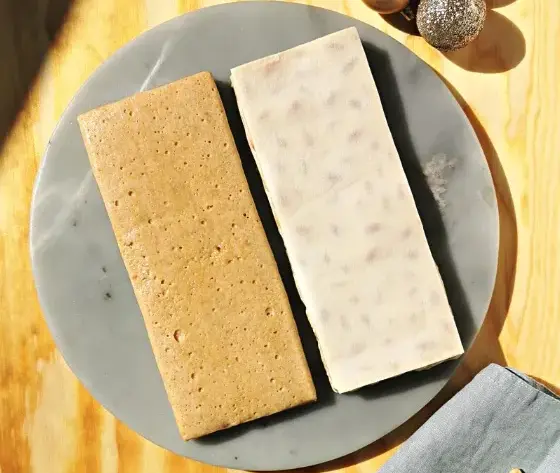
Turrón a la piedra and traditional Jijona turrón are both associated with the almond-confectionery heritage of Alicante, but they are not interchangeable. Their flavouring, preparation and texture differ in ways that matter when buying a gift, baking or serving them as a dessert.
Índice de Contenidos
What is turrón a la piedra?
Turrón a la piedra is a finely milled almond sweet often associated with cinnamon and lemon zest. The name refers to the historic grinding process, traditionally using stone equipment. It is characteristically smooth, aromatic and suited to small slices. Particular recipes may vary across workshops.
What is Jijona turrón?
Jijona turrón is the classic soft Spanish almond nougat associated with the town of Jijona. Almonds, honey and sugar are processed and refined to create a soft bar with a distinct roasted-nut flavour. Look at the product’s specific ingredients and designation rather than judging solely by colour.
Ingredients and flavour
The most practical clue is seasoning. Turrón a la piedra is typically distinguished by the fragrance of cinnamon and citrus zest, whereas Jijona turrón is more strongly identified with honey and toasted almond. Both are rich confections. Check labels carefully for egg, other nuts or cross-contact information when allergies matter.
Texture, serving and storage
Both can be soft, but a la piedra commonly feels very fine and smooth. Jijona bars can vary in graininess and may release some natural almond oil. Slice with a suitable knife and serve at a moderate room temperature according to the producer’s advice. Store away from excessive heat and follow the package directions.
Which is better for cooking?
For a delicate cinnamon-citrus dessert, turrón a la piedra can bring a useful aromatic profile. For nougat ice cream, creams, mousse and cheesecake, traditional Jijona turrón provides a classic almond-and-honey note. Adjust added sugar because both products are already sweet.
Frequently asked questions
Is turrón a la piedra the same as soft nougat?
No. They can both be soft, but their preparation and characteristic flavourings differ.
Can you use either in ice cream?
Yes, but expect different flavours and adjust the sugar content accordingly.
Edited and adapted from the TurronesyDulces original; practical information reviewed October 2026.