
Why can two bags of pine nuts look similar but have very different prices? Spanish pine nuts are commonly obtained from the Mediterranean stone pine (Pinus pinea), whereas nuts exported from China may come from other species, notably the Korean pine (Pinus koraiensis). Their shape, flavour and processing can differ, but country of origin alone does not establish a botanical species or guarantee quality.
Índice de Contenidos
- 1 Which species do Spanish and Chinese pine nuts come from?
- 2 How do they look?
- 3 What about flavour and texture?
- 4 Why do Spanish pine nuts often cost more?
- 5 Nutritional value: is one always healthier?
- 6 What is pine mouth?
- 7 How can you confirm the origin?
- 8 Spanish pine nuts in confectionery and cooking
- 9 Supporting rural production and sustainability
- 10 How to store pine nuts
- 11 Frequently asked questions
- 12 References
Which species do Spanish and Chinese pine nuts come from?
The most characteristic Mediterranean pine nut comes from Pinus pinea, the umbrella or stone pine found across Spain, Portugal, Italy and other Mediterranean regions. Commercial pine nuts produced in China may come from multiple species, including Pinus koraiensis. It is incorrect to treat all Chinese pine nuts as one botanical variety.
How do they look?
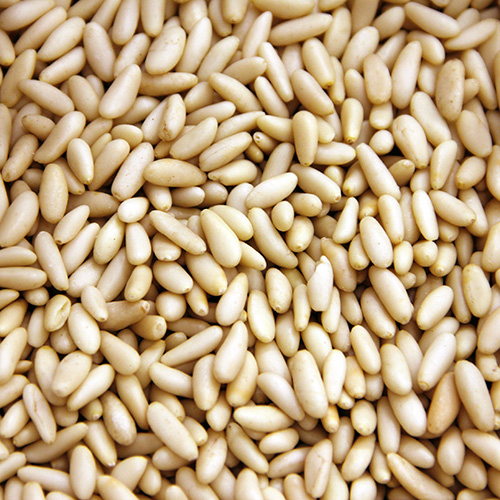
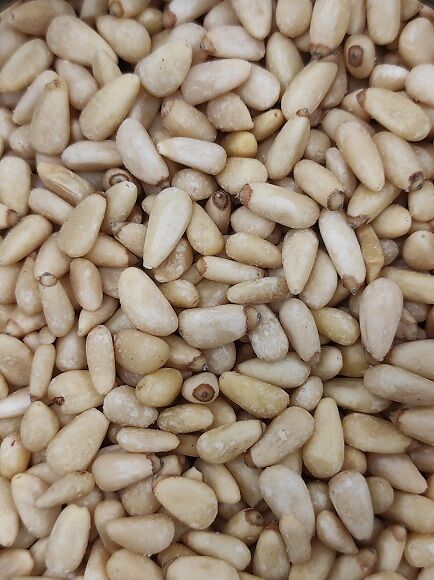
Stone-pine kernels often have a relatively elongated, ivory-coloured appearance. Kernels of other species may be broader or more triangular. Sizes overlap, however, and sorting or processing changes their appearance. Colour is also influenced by storage, moisture and age. A photograph or a visual inspection is not sufficient to authenticate origin.
What about flavour and texture?
Mediterranean pine nuts are prized in Spanish pastry making for their characteristic nutty, slightly resinous flavour and firm texture. Other species have different sensory profiles, which does not mean every imported pine nut is poor quality. Freshness and careful handling matter greatly.
Why do Spanish pine nuts often cost more?
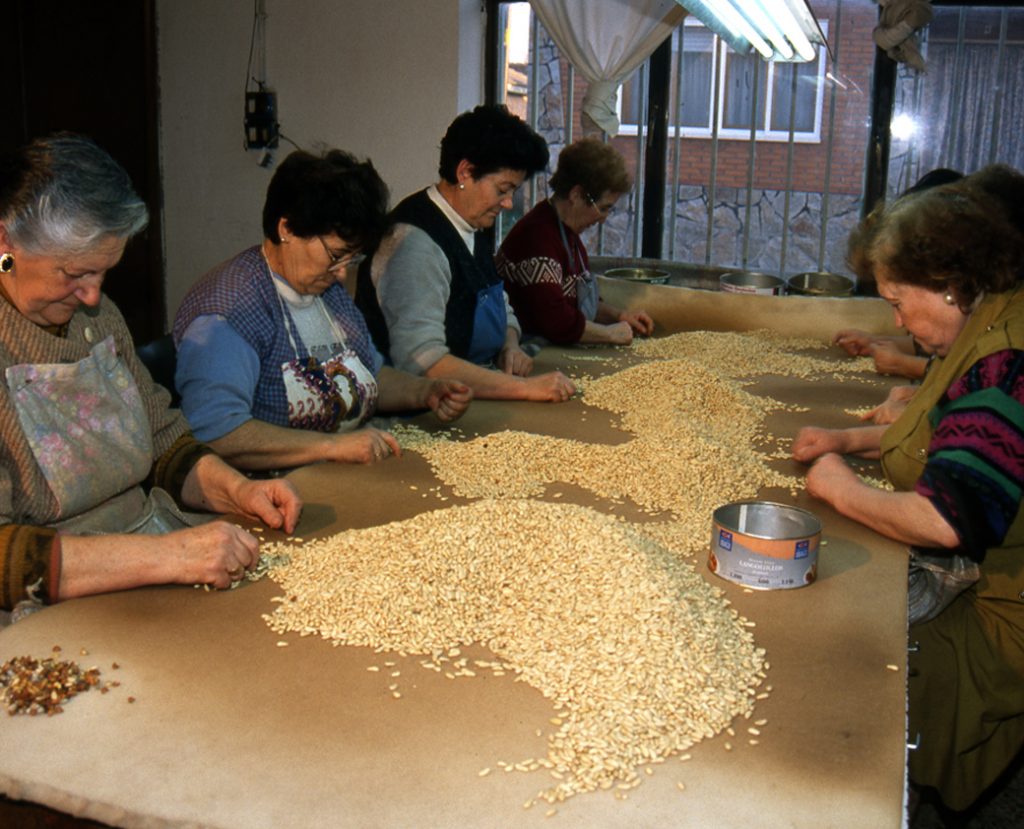
Collecting mature cones, extracting their seeds, shelling, sorting and grading the kernels can be labour-intensive. Harvest fluctuations, pests, weather conditions and relatively limited production influence prices. Imported kernels may be offered more cheaply because of production scale and other market factors; there is no single fixed price difference.
Nutritional value: is one always healthier?
Pine nuts supply fats—mainly unsaturated—along with plant protein and minerals. The exact fatty-acid profile varies among species. There is not enough justification to claim every Spanish pine nut is automatically more nutritious than every Chinese pine nut. Serving size and the overall diet matter more than national origin alone.
What is pine mouth?
Some consumers have reported a delayed bitter or metallic taste lasting days after eating particular batches of pine nuts. Food-safety investigations have associated some incidents with species such as Pinus armandii, which should not be confused with the commercially used Pinus koraiensis. The mechanism is not fully understood. Buy from traceable suppliers and avoid questionable or rancid batches.
How can you confirm the origin?
Look for a clear country-of-origin declaration, the scientific species name where provided, the producer or packer, batch identification and reliable supply-chain documents. Laboratory techniques can help confirm species. A low price, unusual shape or darker colour is not proof of fraud.
Spanish pine nuts in confectionery and cooking
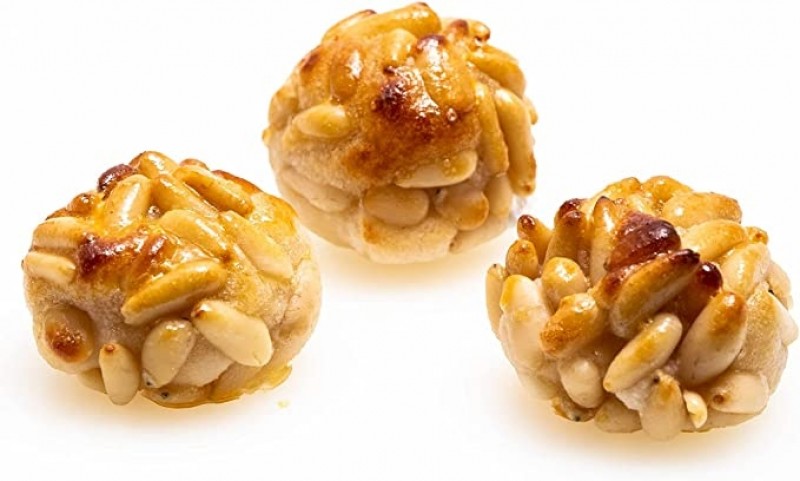
In Jijona and throughout Spain, pine nuts appear in marzipan sweets, empiñonadas, pastries and sugar-coated delicacies. They are also used in pesto, sauces, salads and vegetable dishes. Gently toast them without burning to bring out their aroma.
Supporting rural production and sustainability
Choosing traceable Mediterranean pine nuts can support local harvesters, processors and forest management, but sustainability depends on the practices of each producer. Supporting Spanish sourcing and checking credible origin information are more useful than assuming imports are necessarily unsustainable.
How to store pine nuts
Keep nuts dry, cool, tightly closed and away from light. For longer storage, refrigeration or freezing can help preserve their oils. Discard any batch with an unpleasant rancid smell. Check allergen advice for your household.
Frequently asked questions
Are all pine nuts from China the same species?
No. Several pine species can supply commercial kernels, and species identification matters.
Can I identify Spanish pine nuts just by their colour?
Not reliably. Batch documentation and traceability are stronger evidence.
Is pine mouth caused by every Chinese pine nut?
No. Incidents have been associated with particular species and batches, not all pine nuts from China.
References
NSW Food Authority: pine nuts and pine mouth · ANSES: pine nut species and taste disturbances