
Spanish turrón is traditionally built around a few essential ingredients: almonds, honey, sugar and, in some recipes, egg white. Yet the final texture can range from a crisp Alicante bar to a soft, finely ground Jijona turrón. Understanding the method helps explain why the two classics taste and feel so different.
Índice de Contenidos
The ingredients that define traditional nougat
The choice of almond matters greatly. Marcona almonds are appreciated for their rounded flavour and oil content, while honey contributes aroma as well as sweetness. Sugar influences consistency, and albumen can aerate the cooked mixture. Exact formulas vary by producer and quality category; do not assume every bar has the same almond percentage.
Roasting, cooking and mixing
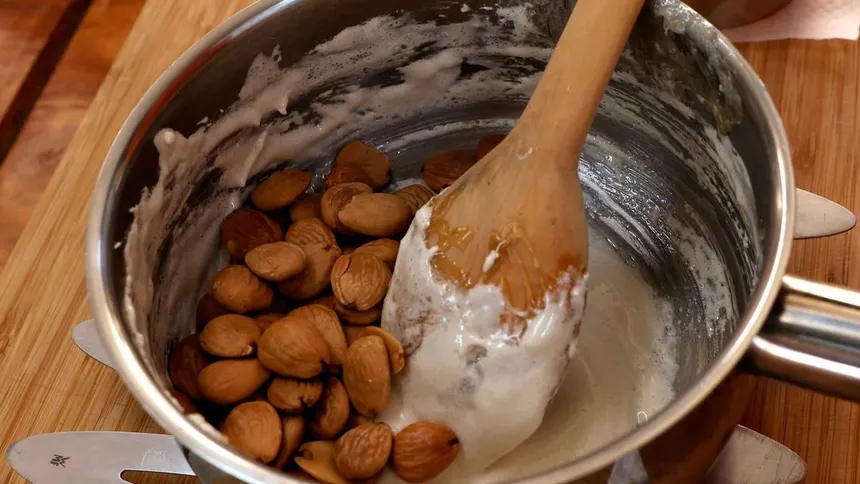
Almonds are typically roasted to develop aroma before entering the nougat mixture. Honey and sugar are heated under controlled conditions so that the texture becomes appropriate for the desired product. In traditional workshops, heat, stirring and the point at which the almonds are incorporated require experience. Cooking temperatures and times depend on the recipe and machinery.
Hard Alicante turrón
For hard turrón, whole roasted almonds remain visible inside a set honey-and-sugar matrix. The paste is spread or pressed into bars, often between edible wafer sheets, and cooled before cutting. The result should be firm and crunchy, although finished textures depend on the formulation and storage conditions.
Soft Jijona turrón
Soft Jijona turrón involves additional grinding or refining that reduces the almond pieces to a more uniform paste. The natural oils of the nuts help create the characteristic soft texture. In artisan production, the texture and flavour develop through carefully controlled processing, not merely by adding liquid to a hard turrón mixture.
Buying and storing authentic turrón
Read the exact ingredient list and any recognised geographical designation printed on the packaging. Protect the product from excess heat and humidity. Follow its best-before date and the manufacturer’s storage recommendations, especially in warm climates. For visitors to Jijona, a producer visit is an excellent way to see how techniques have evolved.
Frequently asked questions
Is turrón the same as French nougat?
They share a confectionery family, but Spanish regional varieties have distinctive ingredients, processing and textures.
Why is Jijona turrón soft?
Because the roasted almonds undergo extra grinding and refinement, releasing their natural oils into the paste.
Edited and adapted from the TurronesyDulces original; practical information reviewed October 2026.